 — a turn-based roguelike of two rings
Two rings — the dungeon around you and your spells within you — and each turn you may only turn one of them.
Register interestEarly access November 2026 · £9.99 on release
The rule
One ring, or the other. Never both.
Turn the dungeon ring and a new card comes to stand beside you. Turn the spell ring and you change what you are about to cast. You do not get to do both, and almost every death in this game is that decision made once too greedily.
The dungeon
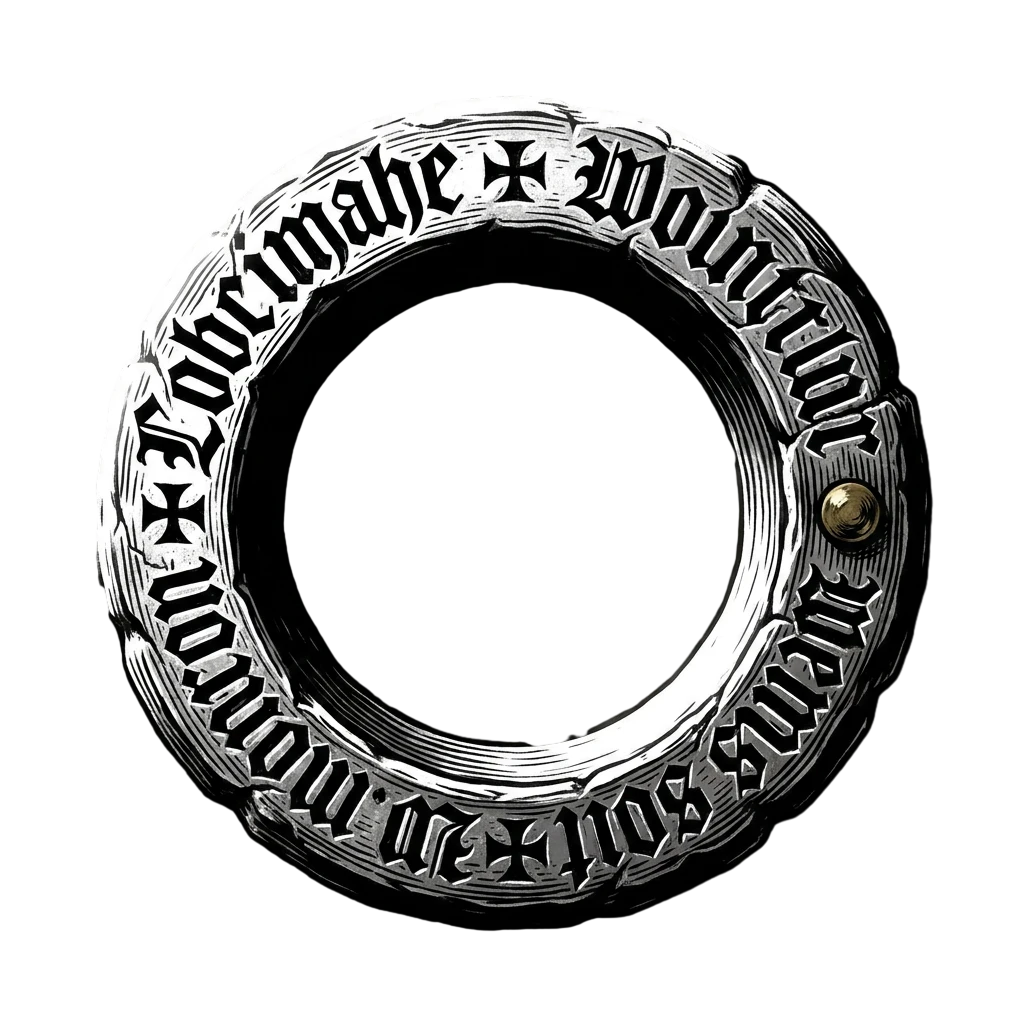
Cards stand around you and only the two beside you can be reached. Everything else has to be brought round, one turn at a time, while it is still deciding what to do to you.
The spells
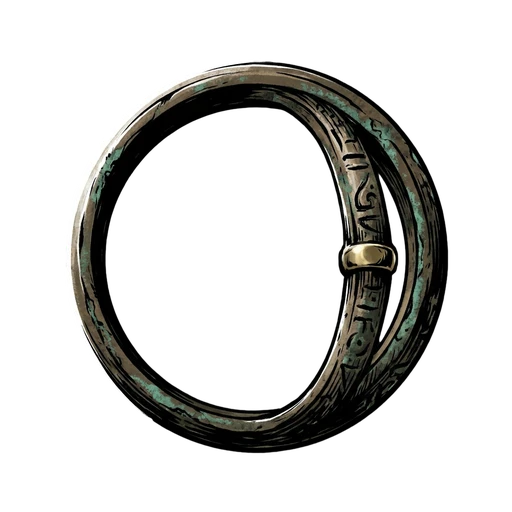
What you have built, casting from the top. Advance it and the next component comes round — which is also the only way to reach the piece you actually wanted.
8
floors
The Sunken Choir, deepening. A Weave between each one.
50
components
25 cores and 25 glyphs, and the order you lay them in is the build.
21
of the Choir
Each with its own reach, wind-up and appetite.
A turn
Everything costs the same thing: the turn you are standing in.
Look at what is beside you
Two cards are in reach. A card shows what it will do and how many turns until it does it — a wind-up of two is two turns of warning, and a promise.
Cast, take, or turn
Casting fires the top of your spell ring at a card and costs mana. Taking picks up loot, or a stair. Turning either ring costs nothing but the turn, and the turn is the expensive part.
Then everything else moves
Wind-ups tick down. Things that move, move. The card that was safely across the ring is the card beside you now.
At the stair, the Weave
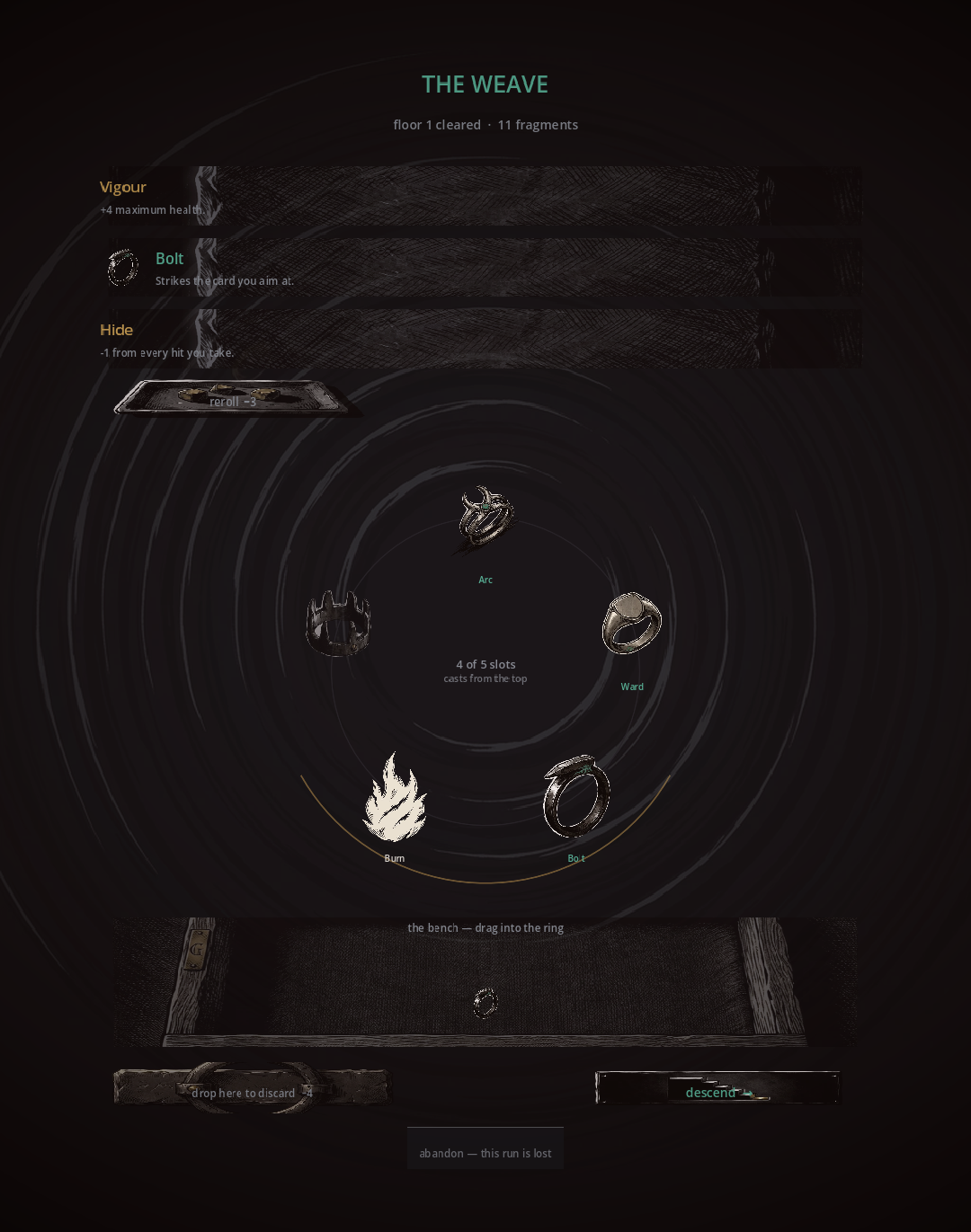
One of three offers — a component, more room on the ring, health back — and then you rearrange what you carry. A glyph modifies the core behind it, so moving one piece rewrites two spells.
The build
Spells are assembled, not picked.
A Core is a ring you wear and it does the work. A Glyph is a tattoo on the back of the hand, and it modifies the Core behind it. The same six pieces are a different spell depending on how you lay them out.
Tap any piece for its numbers
All 25 cores
All 25 glyphs
What is down there
The Sunken Choir.
Drowned acolytes in waterlogged robes. A bellwright bent under a cracked bronze bell twice its size. An anchorite chained to a ship’s anchor, arms like columns. They do not stop singing.
Tap one to see what it takes to kill it
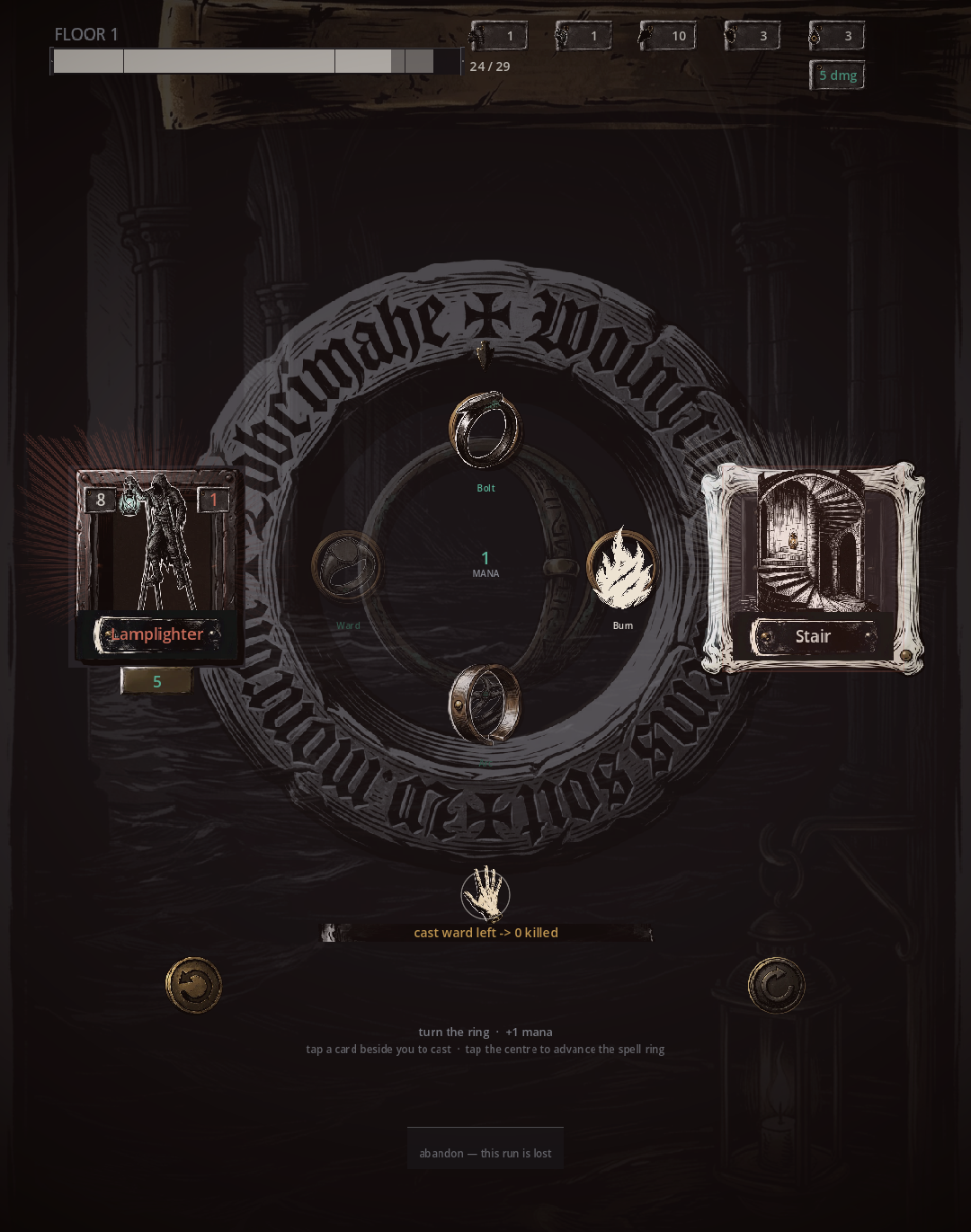
In play
Real captures, not mock-ups.
If one of those brought you here
Games like Ring of Pain and Magicraft.
Those two are the closest things to this that exist, they are both good, and they are both finished — which Ringcraft is not. So, asked and answered honestly rather than left for a review site to guess at.
Is Ringcraft like Ring of Pain?
Openly, yes. Ring of Pain put the dungeon on a ring you can read at a glance, with creatures that tell you what they are about to do and turns that cost you something whether or not you attack. Ringcraft is that loop with a second ring inside it — your spells, casting from the top — and the rule that you may only turn one ring a turn. Ring of Pain is finished and five years deep and this is neither, so buy theirs first; come back if what you want next is the same tension with a build you assemble rather than collect.
Is Ringcraft like Magicraft?
In the way that matters: a spell is something you build out of parts rather than pick off a list, and the good moments are the combinations nobody designed. Magicraft is real-time and you dodge. Ringcraft is turn-based and you cannot — wind-ups tick down only when you spend a turn, so a threat two turns away is a promise you have exactly two turns to answer. The same inventiveness, none of the reflexes.
Ring of Pain was developed by Simon Boxer and Twice Different; Magicraft by Wave Games. Both are trademarks of their owners. Ringcraft is made by Dalton Digital and is not affiliated with, endorsed by or connected to either studio — they are named here only because they are the honest answer to what this game is like.
Nothing survives a run but what you carry out of it.
Early access
£4.99
From November 2026
On release
£9.99
Q2 2027
The shop is not open yet. Leave an email and we will tell you the day it is — nothing is charged, and buying once covers every update to full release.
Terms of sale · © 2026 Dalton Digital